
SEO for Manufacturers & Exporters: How B2B Companies Generate Global Inquiries & High-Ticket RFQs
A step-by-step B2B organic search framework for industrial manufacturers, marble processors, and chemical exporters to escape B2B directory dependence.

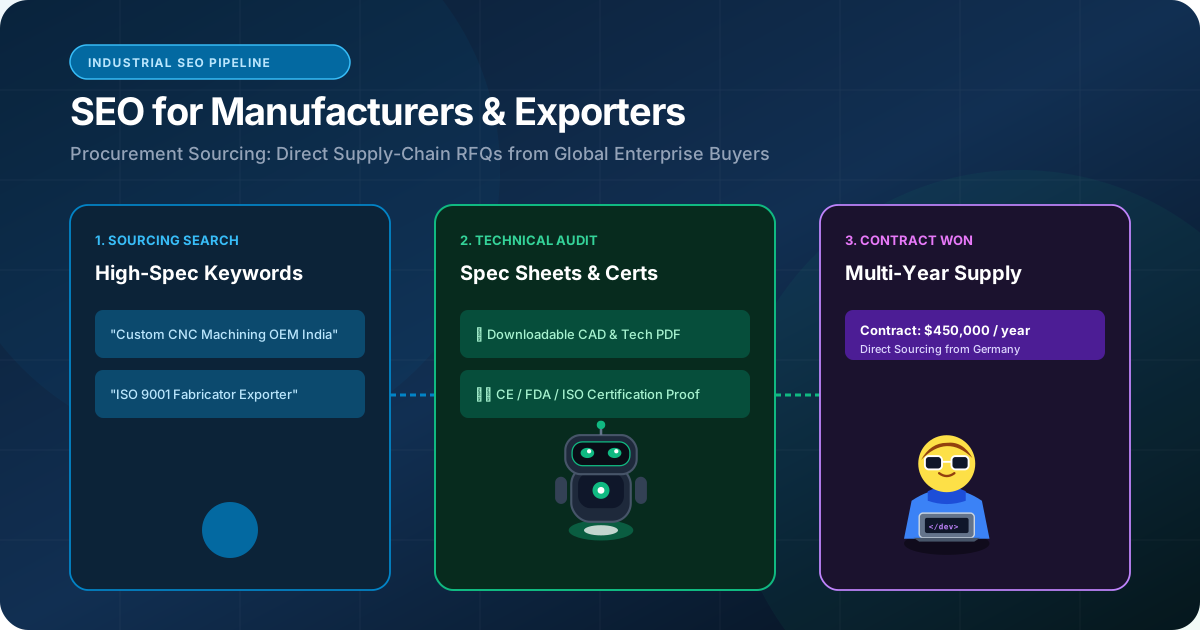
- 1. The B2B Marketplace Trap: Escaping Indiamart & Alibaba
- 2. How Modern Procurement Officers & Importers Search
- 3. Transforming Spec Sheets & CAD Files into Ranking Engines
- 4. International Targeting: Hreflang, CDN & Regional Entities
- 5. Engineering the B2B RFQ (Request for Quote) Conversion Funnel
- 6. Building Authoritative B2B Case Studies That Close Deals
Rajasthan is an industrial manufacturing powerhouse. From the vast green marble, granite, and quartz processing hubs of Udaipur, Rajsamand, and Kishangarh to heavy engineering, precision casting, minerals, agricultural equipment, and textile export units, local manufacturers produce world-class industrial products. Yet, when it comes to international business development, many industrial companies remain dependent on two channels: expensive overseas trade exhibitions or third-party B2B listing directories like IndiaMART and Alibaba. In these shared marketplaces, your products are placed directly alongside dozens of low-cost competitors, initiating a race to the bottom on price. High-value international buyers—such as commercial construction procurement directors in the United States, chemical sourcing managers in Europe, or architectural firms in Dubai—rarely rely on crowded public directories for high-ticket contracts. They conduct direct, specific technical searches on Google. This guide outlines how industrial manufacturers can capture international B2B inquiries through organic search.
1. The B2B Marketplace Trap: Escaping Indiamart & Alibaba
Why shared directories compress your margins and commoditize your brand
B2B portals have utility for basic domestic trading, but they carry serious limitations for enterprise manufacturers seeking high-margin export clients.
When an overseas buyer submits an inquiry on a public portal, that identical inquiry is broadcast simultaneously to dozens of competing suppliers. The resulting bidding war forces manufacturers to compete almost entirely on price rather than technical superiority, engineering tolerances, or quality certifications.
In contrast, when an international buyer discovers your proprietary company website through a targeted Google search, you own the entire conversation. You establish direct brand trust, showcase your manufacturing facilities, and secure high-value contracts with superior profit margins.
Relying solely on B2B directories makes your business vulnerable to marketplace fee increases and competitors who undercut pricing on substandard materials.
2. How Modern Procurement Officers & Importers Search
Understanding the technical language of global industrial sourcing
Procurement managers and industrial engineers search using specific technical terminology rather than broad consumer keywords.
Instead of searching for 'marble slabs', an architectural sourcing lead searches for 'custom honed forest green marble slabs ASTM specification' or 'direct quarry supplier Calacatta quartz jumbo size'.
B2B search engine optimization requires mapping every stage of the industrial procurement cycle: material specifications, chemical compositions, tensile strengths, international certifications (ISO, CE, ASTM), and shipping container logistics.
3. Transforming Spec Sheets & CAD Files into Ranking Engines
Unlocking trapped technical value from legacy PDF catalogs
Many manufacturing websites bury their most valuable technical data inside scanned, un-crawlable PDF catalogs that search engine spiders cannot effectively index.
To capture high-intent engineering searches, transform your technical datasheets into dedicated, indexable web pages. Each product page should feature structured tables containing dimensions, chemical compositions, tolerance levels, finish options, and downloadable CAD/BIM models.
Using Schema.org Product, TechArticle, and Organization markup helps search engines interpret and display your technical specifications directly in search results.
| Page Component | Technical Best Practice | Impact on B2B Buyer Behavior |
|---|---|---|
| Standardized Technical Table | Clean HTML table with ASTM/ISO grades and physical properties | Allows engineers to confirm compliance instantly without waiting |
| High-Res Surface / Part Detail | 360-degree zoomable WebP photography showing finishing quality | Builds visual confidence for buyers unable to visit your factory |
| Factory Facility Proof | Video walk-through of CNC bridge saws or manufacturing lines | Proves you are a direct manufacturer rather than a middleman trader |
| Streamlined RFQ Action | Frictionless 'Request Custom Spec / Quote' modal with CAD upload | Maximizes lead generation from high-intent visiting buyers |
4. International Targeting: Hreflang, CDN & Regional Entities
Overcoming the technical barriers to global organic discovery
Serving international buyers requires configuring your website infrastructure to meet global technical standards:
Hreflang & Regional Language Targeting: If you export heavily to the Middle East, Europe, or Latin America, implementing proper hreflang annotations and localized language subdirectories ensures Google serves the appropriate regional edition.
Global CDN Deployment: A manufacturing website hosted on a slow domestic server in India may take six seconds to load for a buyer in Frankfurt or Los Angeles. Deploying on an edge network (like Cloudflare or Vercel Edge) guarantees sub-second speeds globally.
International Entity Association: Establish digital entity associations with international trade bodies, import-export customs databases, and global chamber of commerce registries.
5. Engineering the B2B RFQ (Request for Quote) Conversion Funnel
Moving beyond basic 'Contact Us' forms to capture real procurement specifications
Consumer eCommerce sites optimize for instant credit card checkouts, but B2B industrial transactions depend on detailed Requests for Quotation (RFQs).
A high-converting B2B RFQ funnel should invite the prospect to share their project parameters: required quantity (e.g., metric tons, square meters, container counts), delivery destination port, desired surface finish, and an optional architectural file upload. This qualifies the lead while providing your sales engineering team with the exact details needed to prepare a formal quotation.
6. Building Authoritative B2B Case Studies That Close Deals
Showcasing past project delivery to remove procurement risk
Commercial buyers are inherently risk-averse. Choosing an unverified supplier across the world carries supply chain and career risks if the shipment fails quality checks or misses project deadlines.
Publish detailed project case studies documenting past successful deliveries: 'How We Supplied 120,000 Sq Ft of Custom Rain Forest Green Marble for a Commercial Hotel Complex in Dubai'. Include packing details, transit times, batch testing reports, and photos of the installed finished project. This tangible proof dissolves procurement hesitation.
The Bottom Line & Next Steps
For industrial manufacturers and exporters, organic search engine optimization is the most reliable, cost-effective engine for acquiring enterprise clients and expanding globally. At RankVRA, we help industrial and manufacturing leaders build high-performance digital platforms that turn technical competence into international revenue. Contact our team to explore our B2B lead generation services or book a Free Growth Audit.
Questions Business Leaders Ask About SEO for manufacturers
How long does it take for an exporter's website to rank in international markets?▾
Ranking in competitive international markets typically takes between 4 to 8 months of consistent technical foundation work, content localization, and authoritative industry link building. Because B2B contracts often carry values ranging from $20,000 to $500,000+, acquiring even two or three qualified client relationships during this period delivers exceptional ROI.
Should our manufacturing website target domestic and export markets on the same domain?▾
Yes, provided the site architecture is structured logically. You can maintain dedicated international subdirectories or subdomains with localized hreflang tags while presenting clear product catalogs for domestic versus export-grade specifications.
What is the best way to track leads from an international B2B website?▾
We configure multi-channel tracking in Google Analytics 4 that monitors RFQ form submissions, direct email inquiries, WhatsApp chat clicks, and downloadable PDF spec sheet interactions, linking each conversion back to the specific search query and landing page that initiated the session.
Can RankVRA help write complex technical content for our industrial products?▾
Yes. Our team conducts in-depth technical interviews with your chief engineers, plant heads, and sales leadership to capture accurate technical specifications, material grades, and production capabilities, ensuring all published content is authoritative and trustworthy.

Written by Naveen Panchal
AuthorFounder & Lead Technical Architect, RankVRA
Naveen Panchal is the Founder and Technical Director of RankVRA. He specializes in full-stack web engineering, algorithmic search optimization, and performance funnels for hospitality, manufacturing, and local service enterprises across Rajasthan and internationally.
Want to implement these strategies for your business?
RankVRA engineers high-speed web platforms, localized Google Maps dominance, and algorithmic SEO funnels that turn searchers into long-term clients.
Related Growth Blueprints
Explore more strategic articles from the RankVRA engineering desk.
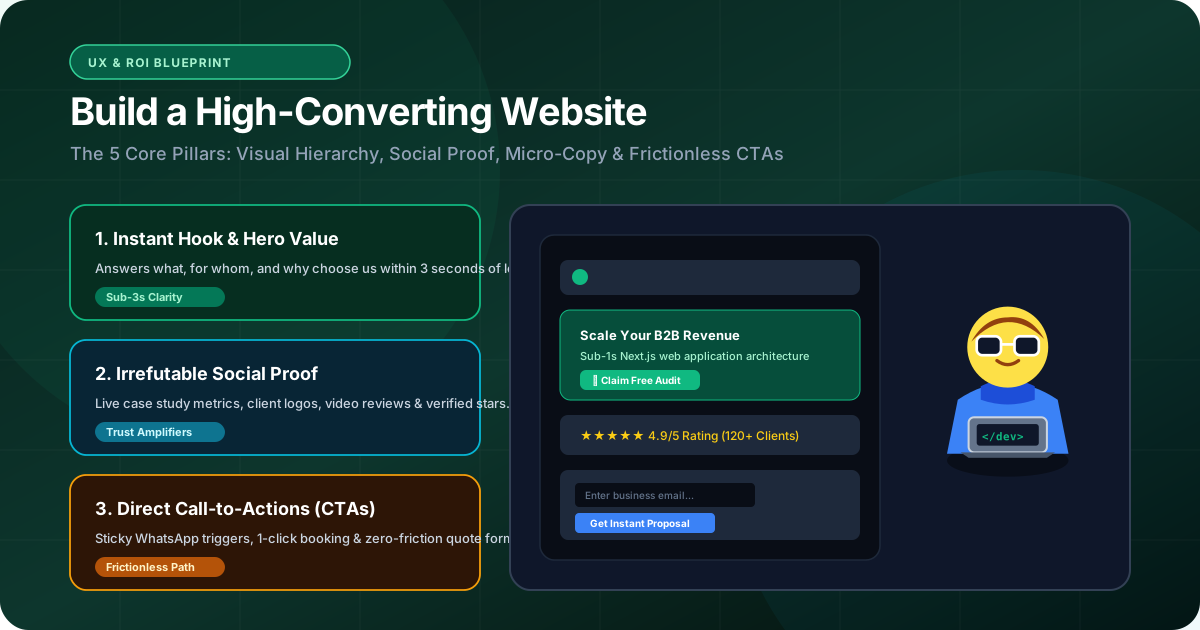
How to Build a High-Converting Website: The Blueprint That Turns Google Traffic Into Paying Customers
Learn how to build a high-converting website from scratch. Discover the exact engineering, UX design, copy structure, and speed optimizations that convert traffic into revenue.
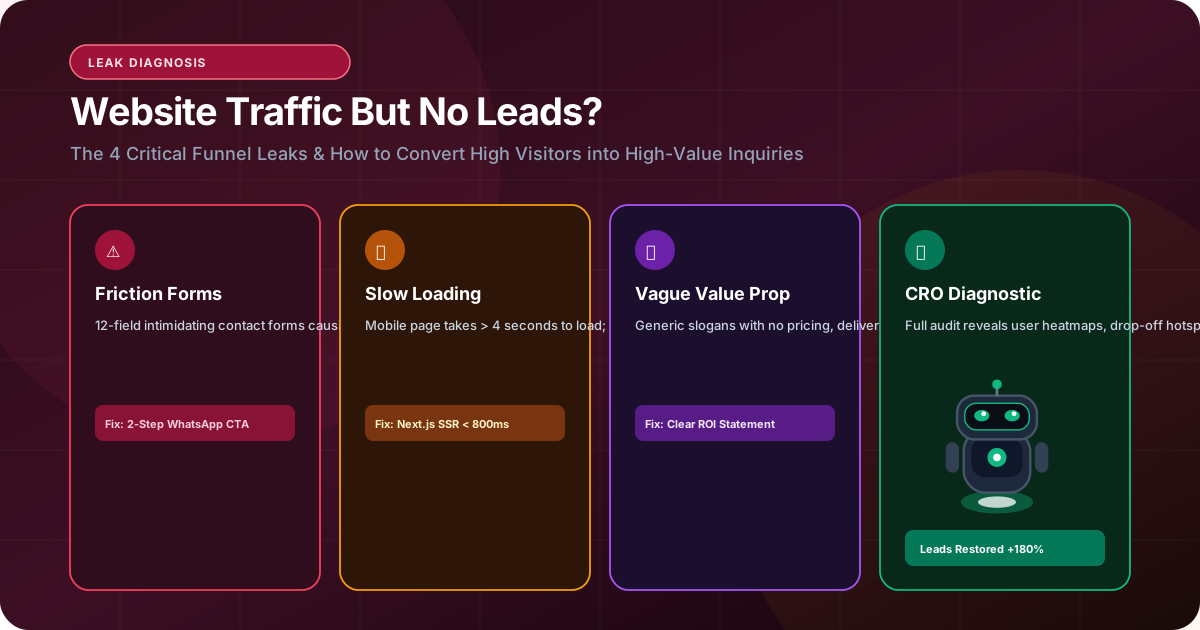
Why Your Website Gets Traffic but No Leads: 10 Conversion Fixes That Generate Inquiries
Experiencing steady website traffic but zero leads? Discover the top 10 conversion leaks—from slow mobile LCP to intimidating forms—and learn the exact fixes to drive inquiries.
SEO Agency in Udaipur: How to Choose the Right Partner for Real Business Growth
Looking for an SEO agency in Udaipur? Discover the exact criteria, essential technical capabilities, red flags to avoid, and the questions to ask before signing a retainer.