
SaaS SEO Strategy: Scaling B2B Software from Zero to 100k Monthly Organic Signups
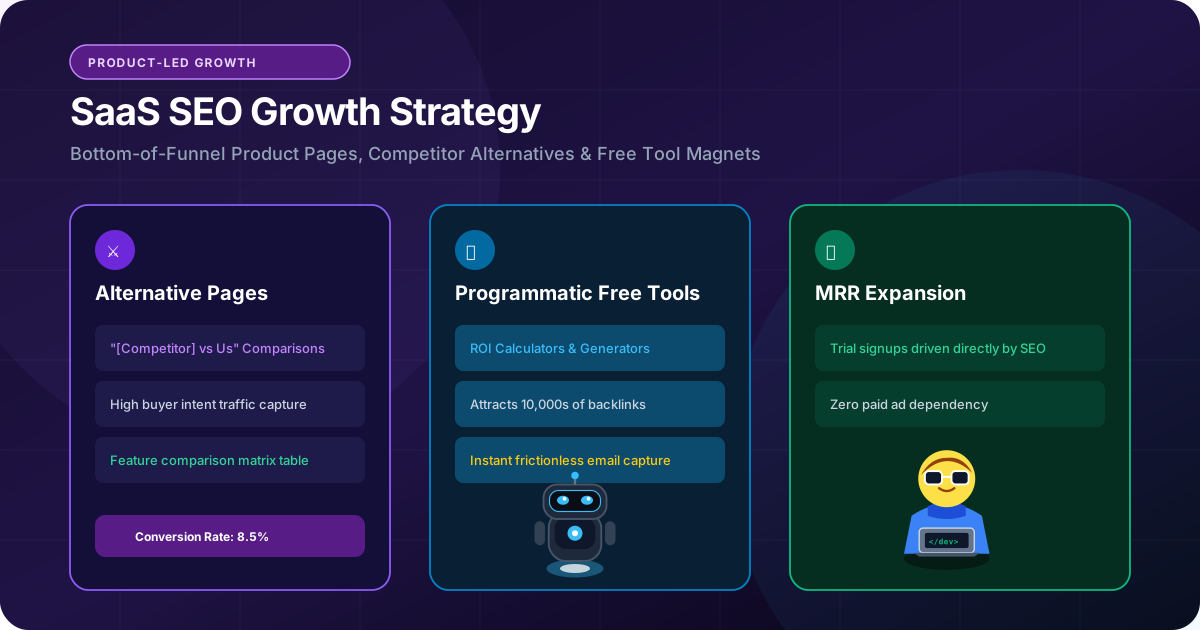
The product-led SEO framework for software companies targeting high-intent alternative, comparison, and programmatic solution queries.

- 1. The Flaw in Traditional SaaS Content Marketing
- 2. Bottom-of-Funnel (BOFU) Comparison & Alternative Pages
- 3. Product-Led SEO: Free Tools, Calculators & Templates
- 4. Programmatic Content Creation at Enterprise Scale
- 5. In-App User Activation & Search Conversion Funnels
- 6. Measuring Organic ARR & Pipeline Velocity
Most venture-backed software companies and bootstrapped SaaS startups approach search engine optimization completely backwards. They hire a freelance content agency, publish 80 fluffy top-of-the-funnel blog posts about generic industry definitions ('What is cloud computing?'), generate thousands of empty curiosity clicks from university students, and wonder why their Monthly Recurring Revenue (MRR) hasn't budged by a single dollar. In software marketing, traffic without product intent is vanity. Profitable SaaS SEO is an engineering and positioning discipline designed to capture prospects who have an active budget, are frustrated with their existing software provider, or are actively searching for a specific workflow solution. This playbook reveals the exact organic growth framework used by top software brands to turn organic search into their #1 pipeline acquisition channel.
1. The Flaw in Traditional SaaS Content Marketing
Why 90% of SaaS blog posts produce zero trial signups or software demos
Top-of-the-funnel (TOFU) informational keywords suffer from near-zero purchase intent. A person searching for 'time management tips' is days, months, or years away from purchasing enterprise workforce management software.
Yet, software startups spend 80% of their marketing budget producing generic educational blog posts that never convert. Meanwhile, their high-intent competitors are systematically ranking for Bottom-of-the-Funnel (BOFU) search queries: users searching for competitor replacements, pricing comparisons, and specific feature integrations.
To build an organic acquisition engine that drives predictable MRR growth, you must invert the traditional content pyramid: invest 70% of your resources in Bottom-of-Funnel and Middle-of-Funnel intent assets before ever writing a top-of-funnel guide.
- Invert the funnel: prioritize high-intent comparison and solution keywords over generic educational terms.
- One high-intent BOFU visitor is worth more in enterprise pipeline value than 500 casual blog readers.
- Measure SEO success by Annual Recurring Revenue (ARR) attribution, not raw session counts.
2. Bottom-of-Funnel (BOFU) Comparison & Alternative Pages
Capturing high-intent buyers who are ready to switch from legacy competitors
The highest-converting search terms in the entire software industry follow three specific syntax patterns: '[Competitor] Alternatives', '[Your Brand] vs [Competitor]', and 'Best [Category] Software for [Specific Industry]'.
When a user searches for 'Salesforce Alternatives for Small Businesses', they are actively frustrated with Salesforce's enterprise complexity or pricing, hold an allocated budget, and are in the final procurement stage.
Build comprehensive, fair, and data-backed comparison pages. Highlight where your software excels (e.g., faster onboarding, transparent pricing, dedicated WhatsApp support in India), provide side-by-side feature comparison matrices, and include unedited screenshots of your platform.
Never write biased comparison pages that claim your software wins on every single metric. Acknowledge what the incumbent does well for enterprise giants, and explain why your solution is vastly superior for your target demographic. Honesty builds immense buying trust.
3. Product-Led SEO: Free Tools, Calculators & Templates
Turning free software utilities into unstoppable backlink and signup magnets
Product-Led SEO is the practice of carving out a lightweight, un-gated utility from your core software product and offering it as a free web tool.
Think of Canva's free design templates, Ahrefs' free backlink checker, or Shopify's free business name generator. These interactive utilities solve an immediate user pain point in 30 seconds without requiring a credit card.
Because free tools provide genuine utility, they naturally attract thousands of organic backlinks from industry bloggers, forums, and resource lists, raising your overall domain rating while funneling hundreds of qualified users directly into your paid software tiers.
4. Programmatic Content Creation at Enterprise Scale
Scaling landing page velocity through structured templates and dynamic routing
If your software connects with external APIs or supports multiple business types, programmatic SEO allows you to capture massive long-tail search volume.
Build dynamic template architectures using Next.js dynamic routing to generate hundreds of high-value programmatic pages: '[Your Software] + [Integration Partner]' (e.g., Zapier, HubSpot, Shopify), or '[Software Category] for [Specific Vertical]' (e.g., CRM for Real Estate, CRM for Dental Clinics).
Ensure every programmatic page contains unique data attributes, customer testimonials, and distinct screenshots to avoid automated thin content penalties.
| Funnel Stage | Query Example | Intent Level | Avg. Signup Conversion Rate |
|---|---|---|---|
| Bottom of Funnel (BOFU) | 'Zoho CRM alternative for manufacturing' | Immediate Purchase Intent | 8.5% - 16.0% |
| Bottom of Funnel (BOFU) | 'HubSpot vs ActiveCampaign pricing' | Active Vendor Evaluation | 6.0% - 12.5% |
| Middle of Funnel (MOFU) | 'B2B lead scoring template excel' | Active Solution Seeker | 3.0% - 7.0% |
| Product Utility (PLG) | 'Free GST invoice generator online' | Immediate Tool User | 4.0% - 9.0% |
| Top of Funnel (TOFU) | 'What is customer churn rate' | Casual Educational Query | 0.2% - 0.8% |
5. In-App User Activation & Search Conversion Funnels
Guiding organic searchers to their first 'Aha!' moment in under 60 seconds
Generating an organic signup is only half the battle. If a new user lands inside your application and encounters a confusing 10-step onboarding maze, they will abandon the product before experiencing its value.
Align your landing page call-to-action directly with immediate onboarding momentum. If the user clicked an article about 'Automating WhatsApp Invoices', drop them directly into the pre-configured WhatsApp invoice workflow upon signup, bypassing generic dashboard tours.
6. Measuring Organic ARR & Pipeline Velocity
Connecting Google Analytics 4 with Stripe, Chargebee, and CRM revenue
Ditch superficial SEO reports that celebrate vanity keyword position bumps. Modern SaaS marketing leadership must report on Customer Acquisition Cost (CAC) by channel, Payback Period, Net Revenue Retention (NRR), and Pipeline Velocity.
When you demonstrate that your programmatic comparison pages and product-led tools generate $45,000 in Net New ARR every quarter at an effective acquisition cost near zero, SEO becomes recognized as your company's most valuable enterprise growth engine.
The Bottom Line & Next Steps
SaaS SEO is not about churning out generic blog posts; it is an engineering-driven growth engine centered around bottom-of-funnel comparison architecture, programmatic template scaling, and product-led utilities. RankVRA engineers custom software landing pages, programmatic architectures, and high-converting search funnels for ambitious tech startups and B2B software companies. Explore our web development services, discover our search strategies, or book a Free Growth Audit today.
Questions Business Leaders Ask About SaaS SEO Strategy
How long does it take for a new SaaS product to gain organic search traction?▾
Bottom-of-the-funnel alternative and comparison pages can begin capturing high-intent trial signups within 60 to 90 days. Scaling broader programmatic hubs and product-led utilities typically achieves compounding growth over a 6 to 12-month horizon.
Is it legally safe to publish comparison pages comparing our software against competitors?▾
Yes, comparative advertising is legal in most jurisdictions provided all statements are factually accurate, verifiable, and not deceptive. Clearly disclaim competitor trademarks, use fair side-by-side matrices, and link to public competitor pricing documentation.
What is the difference between Product-Led SEO and Content-Led SEO?▾
Content-Led SEO focuses on publishing educational articles to capture informational readers. Product-Led SEO builds interactive software utilities, calculators, and free tools directly into the website that solve immediate user problems and naturally convert users into paid product tiers.
How can SaaS companies avoid duplicate content issues when building programmatic pages?▾
Avoid generating programmatic pages that merely swap out city or keyword tokens without unique value. Ensure each programmatic page incorporates unique database parameters, distinct customer testimonials, specific integration documentation, and custom workflows tailored to that exact keyword.

Written by Naveen Panchal
AuthorFounder & Lead Technical Architect, RankVRA
Naveen Panchal is the Founder and Technical Director of RankVRA. He specializes in full-stack web engineering, algorithmic search optimization, and performance funnels for hospitality, manufacturing, and local service enterprises across Rajasthan and internationally.
Want to implement these strategies for your business?
RankVRA engineers high-speed web platforms, localized Google Maps dominance, and algorithmic SEO funnels that turn searchers into long-term clients.
Related Growth Blueprints
Explore more strategic articles from the RankVRA engineering desk.
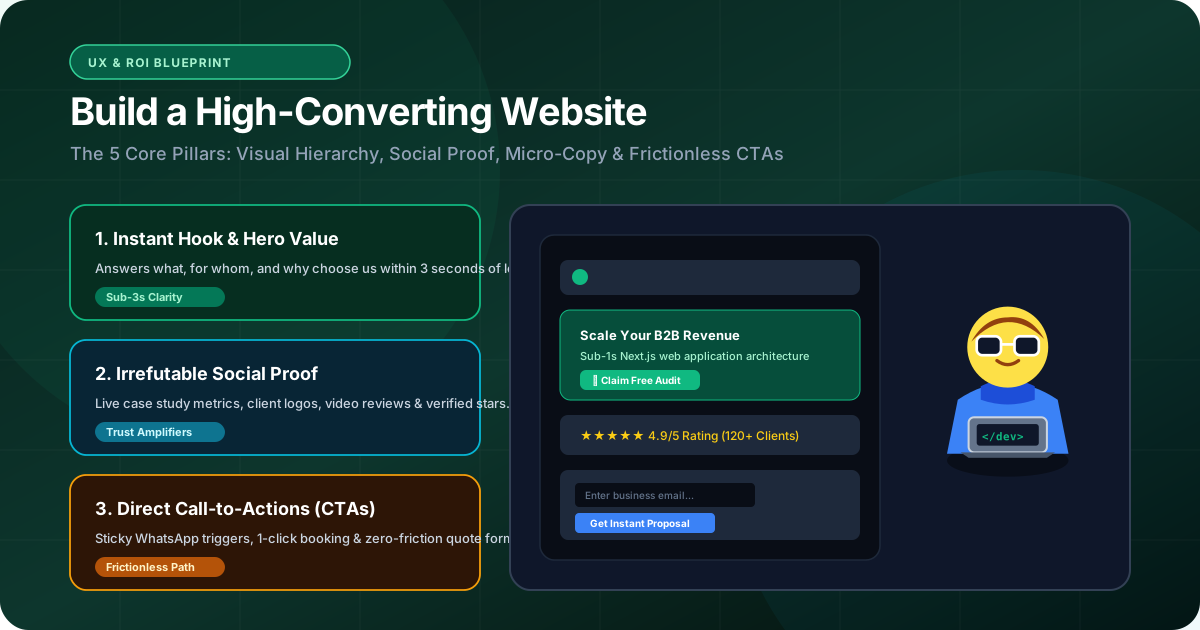
How to Build a High-Converting Website: The Blueprint That Turns Google Traffic Into Paying Customers
Learn how to build a high-converting website from scratch. Discover the exact engineering, UX design, copy structure, and speed optimizations that convert traffic into revenue.
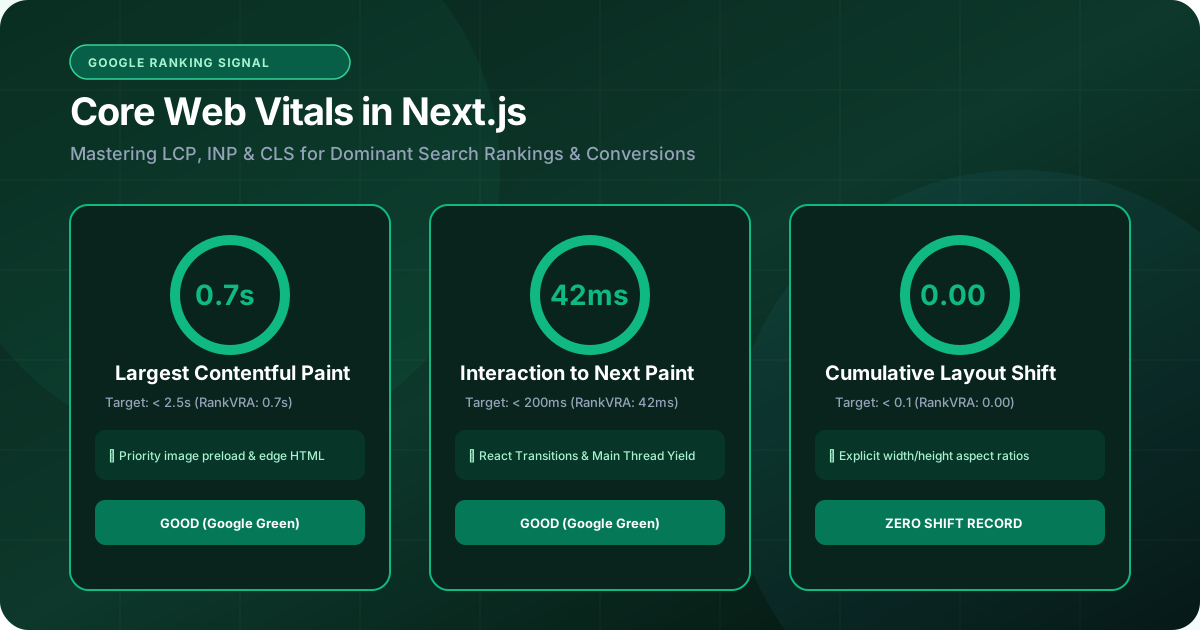
Core Web Vitals in Next.js: The Complete Guide to Sub-Second Load Speeds
Learn how to optimize Core Web Vitals in Next.js 15/16. Eliminate Interaction to Next Paint (INP) lag, master image optimization, and hit 99+ on Google PageSpeed.
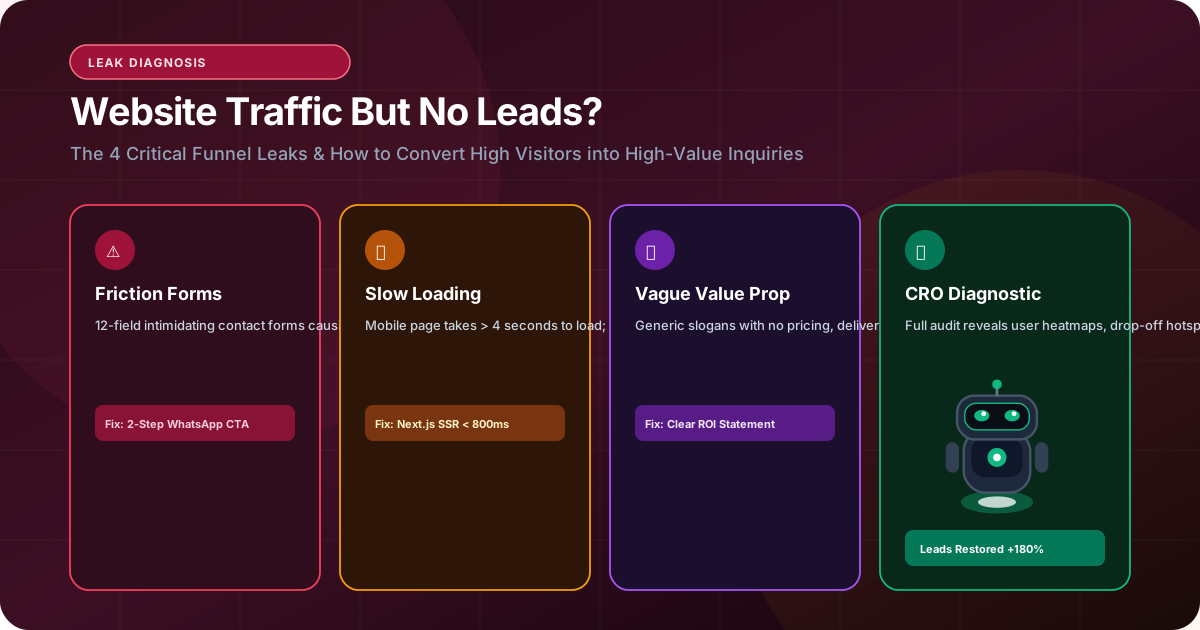
Why Your Website Gets Traffic but No Leads: 10 Conversion Fixes That Generate Inquiries
Experiencing steady website traffic but zero leads? Discover the top 10 conversion leaks—from slow mobile LCP to intimidating forms—and learn the exact fixes to drive inquiries.