
How to Build a Multi-Vendor Ecommerce Website: Features, Architecture and Cost Factors
A comprehensive technical blueprint for multi-seller marketplace platforms—seller onboarding, automated escrow splits, catalog ingestion, and high-concurrency scaling.


- 1. The Fundamental Difference: Store vs Two-Sided Marketplace
- 2. The 3 Core Architectural User Roles & Portals
- 3. Financial Architecture: Split Payments, Escrow & Commissions
- 4. Database Architecture: Multi-Origin Carts & Inventory Locks
- 5. Admin Moderation, Product Governance & Dispute Resolution
- 6. Key Technical Factors Determining Marketplace Investment
- 7. The Marketplace Architecture Scoping Checklist
Building an online marketplace—like Amazon, Etsy, or specialized B2B industrial exchanges—is one of the most commercially lucrative digital business models in modern commerce. Instead of purchasing, storing, and shipping physical inventory yourself, you operate the trusted digital infrastructure where independent third-party merchants sell to buyers while your platform collects an automated commission on every transaction. However, multi-vendor ecommerce website development is vastly more technically challenging than building a standard online store. In a standard shop, there is one seller, one warehouse, and one bank account. In a marketplace, every order may contain items from three different sellers located in different jurisdictions, requiring simultaneous split payments, automated shipping labels, and independent return policies. In this technical blueprint, RankVRA's ecommerce engineering team breaks down the complete architecture, feature set, and cost drivers required to engineer a resilient, scalable online marketplace in 2026.
Building a multi-vendor ecommerce marketplace requires a complex multi-sided platform architecture: independent seller dashboards for inventory and order management, an automated escrow payment gateway (like Stripe Connect) to split platform commissions and vendor payouts, multi-origin shopping carts, automated tax calculation, and centralized super-admin governance. Development investment is determined by concurrency requirements, custom logistics integrations, catalog moderation workflows, and regulatory compliance.
1. The Fundamental Difference: Store vs Two-Sided Marketplace
Why marketplaces require platform engineering rather than simple website building
A standard single-vendor e-commerce website represents a 1-to-many relationship: your company sells to many customers. A multi-vendor e-commerce platform represents a many-to-many relationship: hundreds or thousands of independent merchants sell to millions of buyers through a unified digital storefront.
This structural difference ripples across every layer of the software stack:
• Checkout & Cart Mechanics: When a customer places an order containing shoes from Seller A and a watch from Seller B, the platform must split that order into two distinct vendor fulfillment sub-orders with separate tracking numbers, shipping costs, and return policies.
• Financial Reconciliation: Customer funds cannot simply flow into the marketplace operator's bank account. Under global financial regulations, collecting money on behalf of third parties requires regulated escrow flows, automated commission withholding, sales tax remittance, and automated seller payouts.
• Data Isolation & Multi-Tenancy: Merchants must never be able to view competitor sales analytics, customer databases, or proprietary supplier pricing. Strict tenant isolation must be enforced at the database level.
2. The 3 Core Architectural User Roles & Portals
Designing dedicated consoles for sellers, buyers, and platform super-admins
A robust marketplace platform consists of three distinct, interconnected web portals:
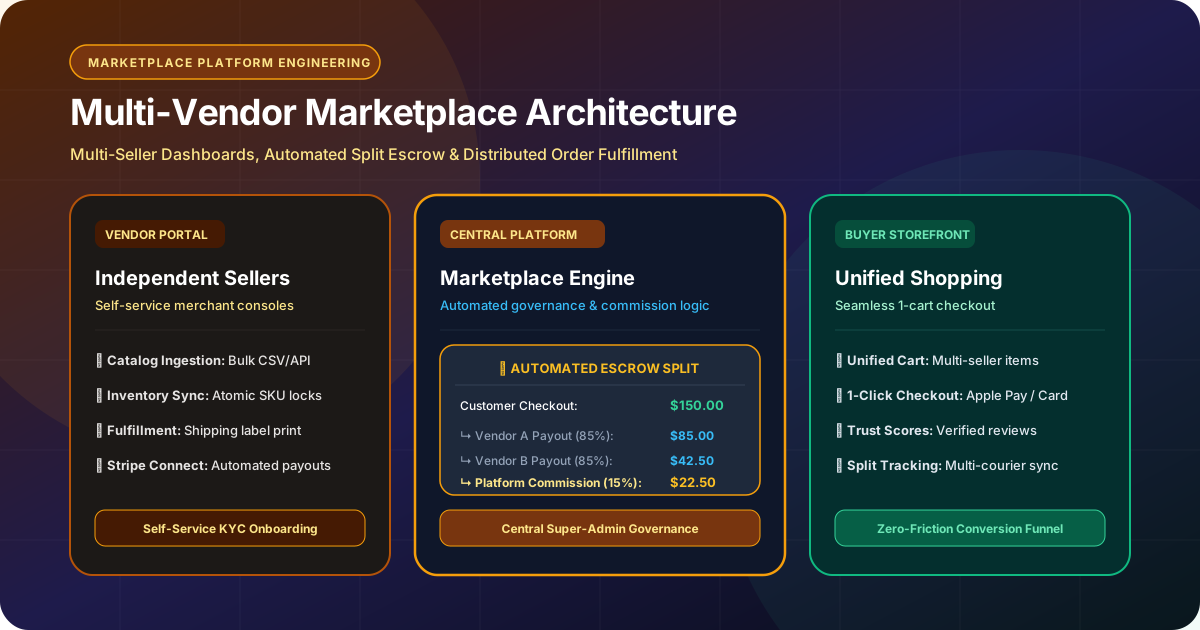
1. The Merchant / Seller Console: A self-service portal where approved vendors onboard their banking details (KYC), upload product catalogs (single SKU or bulk CSV/API), manage localized inventory levels, print shipping manifests, communicate with customers, and analyze payout statements.
2. The Unified Buyer Storefront: A high-performance, mobile-first web application where customers search across millions of products using faceted filtering, view vendor trust ratings, read verified customer reviews, add items from multiple vendors to a single cart, and check out with 1 click using Apple Pay or credit cards.
3. The Super-Admin Operations Dashboard: The central command center where marketplace owners set category commission tiers (e.g., 10% on electronics, 15% on apparel), approve or reject merchant registrations, monitor automated fraud alerts, resolve customer disputes, and generate platform-wide financial compliance reports.
3. Financial Architecture: Split Payments, Escrow & Commissions
Automating money movement without triggering regulatory penalties
Financial architecture is the most critical technical component of a marketplace. In modern multi-vendor platforms, manual payouts via spreadsheets or bank transfers do not scale and introduce immense human error and tax liability.
RankVRA architects automated marketplace financial pipelines using specialized multi-party payment infrastructure like Stripe Connect (Custom or Express accounts) or PayPal Commerce Platform:
• Automated Payment Splitting: When a customer pays $150 for an order ($100 to Vendor A, $50 to Vendor B), the payment gateway automatically routes $85 to Vendor A's account, $42.50 to Vendor B's account, and deposits the $22.50 platform commission (15%) directly into the marketplace operator's account.
• Escrow & Holding Periods: To protect against chargebacks and fraudulent merchants who never ship items, payouts are held in escrow for a designated inspection window (e.g., 7 days after confirmed courier delivery) before funds are released to the seller's bank.
• Automated Tax Remittance: With marketplace facilitator laws across the US, UK, EU, and India, the platform operator is legally responsible for calculating and remitting sales tax across jurisdictions using integrated tax APIs (Stripe Tax, Avalara, or TaxJar).
4. Database Architecture: Multi-Origin Carts & Inventory Locks
Preventing race conditions and stock inconsistencies during high-traffic sales
A common architectural failure in amateur marketplace projects is the 'phantom inventory' problem. If two buyers attempt to purchase the final inventory unit of a merchant's product at the exact same millisecond, an un-optimized database will confirm both orders, forcing an embarrassing order cancellation.
To prevent this, backend development must implement optimistic locking or Redis-backed atomic inventory holds. When a buyer enters the checkout funnel, the platform reserves the SKU for 10 minutes. If checkout completes, the inventory is permanently decremented; if the session expires, the lock releases back to the public pool.
Furthermore, relational PostgreSQL databases with strict foreign key constraints and partitioned order tables ensure that queries across millions of transactions remain fast and reliable.
5. Admin Moderation, Product Governance & Dispute Resolution
Protecting marketplace brand reputation from counterfeit and low-quality sellers
The reputation of your marketplace rests entirely on the quality and reliability of your third-party sellers. Your platform must include automated and manual governance mechanisms:
• Catalog Ingestion & Automated Spam Checks: Image resolution validation, automated profanity/counterfeit brand filters, and mandatory attribute checks before a seller's product can go live on the public storefront.
• Merchant Performance Scoring: Automated tracking of fulfillment speed, order cancellation rates, and customer review scores. Sellers falling below minimum performance thresholds are automatically restricted or suspended.
• In-Platform Dispute Resolution: A secure ticketing interface allowing buyers and sellers to negotiate refunds, replacements, or returns. If the parties fail to reach an agreement within 48 hours, the case automatically escalates to a platform super-admin for binding arbitration.
6. Key Technical Factors Determining Marketplace Investment
What drives the budget when engineering an online marketplace
Because marketplace complexity varies immensely, development costs are dictated by specific architectural scope drivers rather than fixed formulas:
• Platform Foundation: Extending an existing open-source marketplace framework (Medusa.js, Saleor, CS-Cart) vs building a bespoke, proprietary full-stack application (Next.js, Node.js, PostgreSQL).
• Automated Seller Verification (KYC/AML): Integrating automated identity and business license verification APIs (Persona, Stripe Identity) for rapid seller onboarding.
• Shipping & Logistics Integration: Multi-carrier rate calculation APIs (EasyPost, Shippo, Shiprocket) allowing merchants to print shipping labels directly inside their portal.
• Mobile Experience: Responsive web application vs progressive web app (PWA) vs dedicated native iOS and Android marketplace applications.
• Localization & Multi-Currency: Cross-border marketplaces supporting localized tax rules, multi-language catalogs, and dynamic currency conversions.
A commercial MVP marketplace with custom UI design, Stripe Connect payouts, and seller portals typically requires 12 to 20 weeks of engineering. Enterprise-scale platforms with multi-region scaling and automated logistics pipelines require 24+ weeks.
7. The Marketplace Architecture Scoping Checklist
Essential specifications to define before engaging software engineers
Complete this technical checklist before requesting platform quotes:
• Define your monetization model: Flat commission percentage, tiered category fees, monthly vendor subscription, or featured listing promotions.
• Clarify fulfillment logistics: Will vendors ship directly to buyers (drop-shipping/vendor fulfillment), or will items route through a central warehouse?
• Determine sales tax and regulatory obligations across your primary operating states and countries.
• Outline product catalog taxonomy, mandatory product attributes, and SKU variant rules.
• Establish merchant payout cadence and dispute arbitration guidelines.
Key Strategic Takeaways
- Multi-vendor marketplaces require multi-sided platform architecture: seller consoles, buyer storefronts, and super-admin governance.
- Automated split payments and escrow compliance (via Stripe Connect) are mandatory for legal, scalable money movement.
- Database architecture must prevent race conditions through atomic inventory locking and relational data partitioning.
- Development costs are governed by custom workflow complexity, logistics APIs, and multi-tenant scaling requirements.
- Consult with RankVRA's [ecommerce development team](/services/ecommerce-development) to map out your marketplace technical architecture.
The Bottom Line & Next Steps
Building a multi-vendor ecommerce website is a sophisticated software engineering endeavor that creates an immensely valuable, scalable commercial business. By establishing robust seller onboarding, automated payment splitting, and resilient database infrastructure from day one, you build a digital marketplace capable of handling exponential commercial growth.
Questions Business Leaders Ask About multi vendor ecommerce website development
Can WooCommerce or Shopify handle a multi-vendor marketplace?▾
WooCommerce and Shopify were architected as single-vendor platforms. While third-party multi-vendor plugins exist (like Dokan or WCFM), they frequently suffer from severe database bottlenecks, slow page loads, and fragile payment sync when scaling past a few dozen merchants. For a serious commercial marketplace, a custom decoupled architecture (Next.js + Medusa/Node.js) is vastly more stable and scalable.
How do marketplace platforms handle multi-vendor shipping?▾
When a buyer checks out with items from multiple sellers, the platform calculates shipping costs individually for each vendor based on origin zip codes, weight, and carrier rates (via APIs like EasyPost or Shippo). The buyer sees either itemized shipping per vendor or a combined rate, and each vendor receives an independent packing slip and shipping label.
What payment gateway is best for multi-vendor marketplaces?▾
Stripe Connect is the undisputed global standard for multi-vendor platforms. It handles complex split payments, automated vendor KYC onboarding, compliance reporting, and 1099 tax forms across the US, UK, Canada, and Europe. PayPal Commerce Platform and Razorpay Route (India) are also viable regional options.
How do marketplace owners make money?▾
Marketplace operators typically generate revenue through four complementary streams: transaction commission percentages (typically 8% to 20%), fixed per-order fees, monthly merchant subscription tiers for premium seller tools, and sponsored/featured product placement within search results.

Written by Naveen Panchal
AuthorFounder & Lead Technical Architect, RankVRA
Naveen Panchal is the Founder and Technical Director of RankVRA. He specializes in full-stack web engineering, Next.js architecture, and high-performance digital systems for clients across the US, UK, Canada, and India.
Explore Core Commercial Capabilities
Bespoke digital storefronts, custom carts, and marketplace architecture.
Full-cycle engineering for modern digital web platforms.
Connect Stripe Connect, payment rails, and multi-carrier logistics APIs.
Custom multi-tenant portals, seller dashboards, and admin consoles.
- Stripe Documentation: Stripe Connect Marketplace Integration GuideOfficial Reference
- OWASP: OWASP E-Commerce Security GuidelinesOfficial Reference
- W3C: W3C Web Payments StandardsOfficial Reference
Ready to Architect a Scalable Multi-Vendor Marketplace?
Speak with RankVRA senior software architects to review your marketplace model, design automated payout pipelines, and establish a clear technical development roadmap.
Related Growth Blueprints
Explore more strategic articles from the RankVRA engineering desk.

How Much Does It Cost to Build a Business Website in 2026?
How much does a business website cost in 2026? Explore the real cost drivers—design complexity, page count, CMS, custom integrations, security, and maintenance.
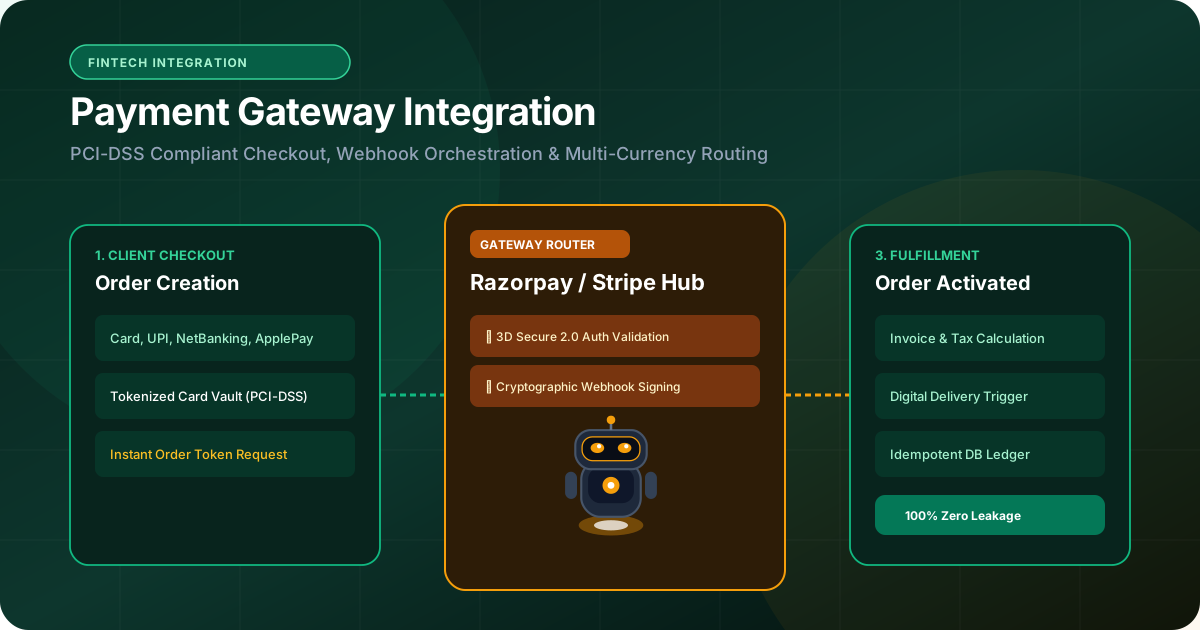
How to Integrate Payment Gateways Into a Website or Web Application
Learn how to integrate payment gateways securely. Master Stripe, Razorpay, webhook verification, recurring billing, and PCI compliance for websites and web apps.
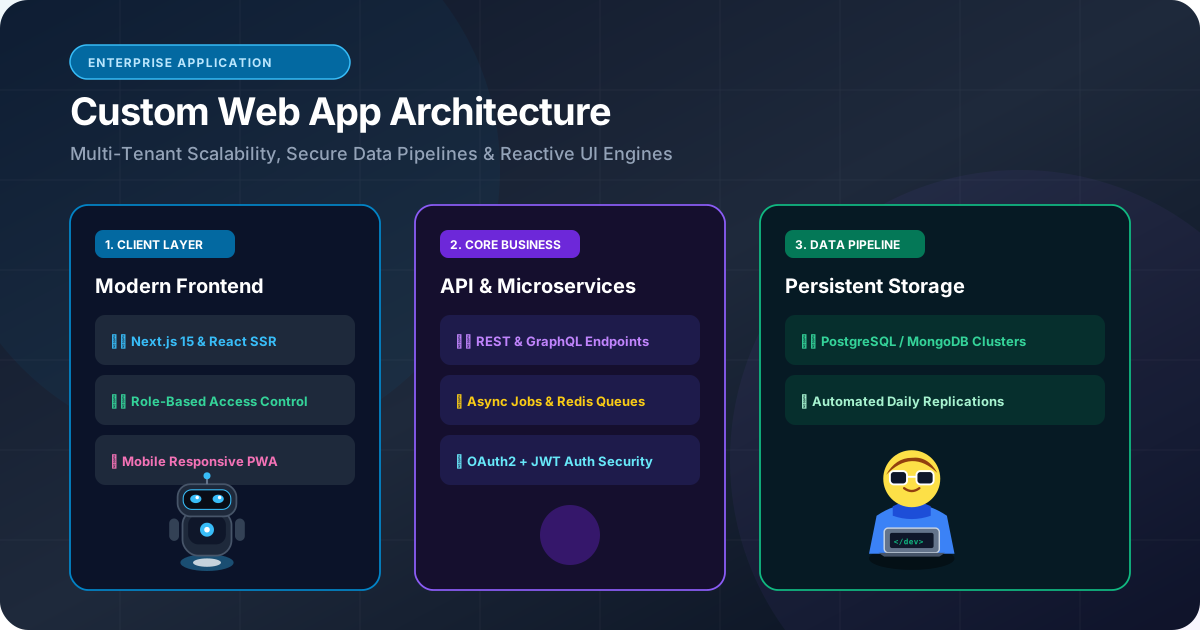
Custom Web Application Development: When Should a Business Build a Custom Web App?
When should a business build custom web applications instead of subscribing to SaaS? Learn how custom portals, wholesale dashboards, and bespoke workflows deliver compounding ROI.
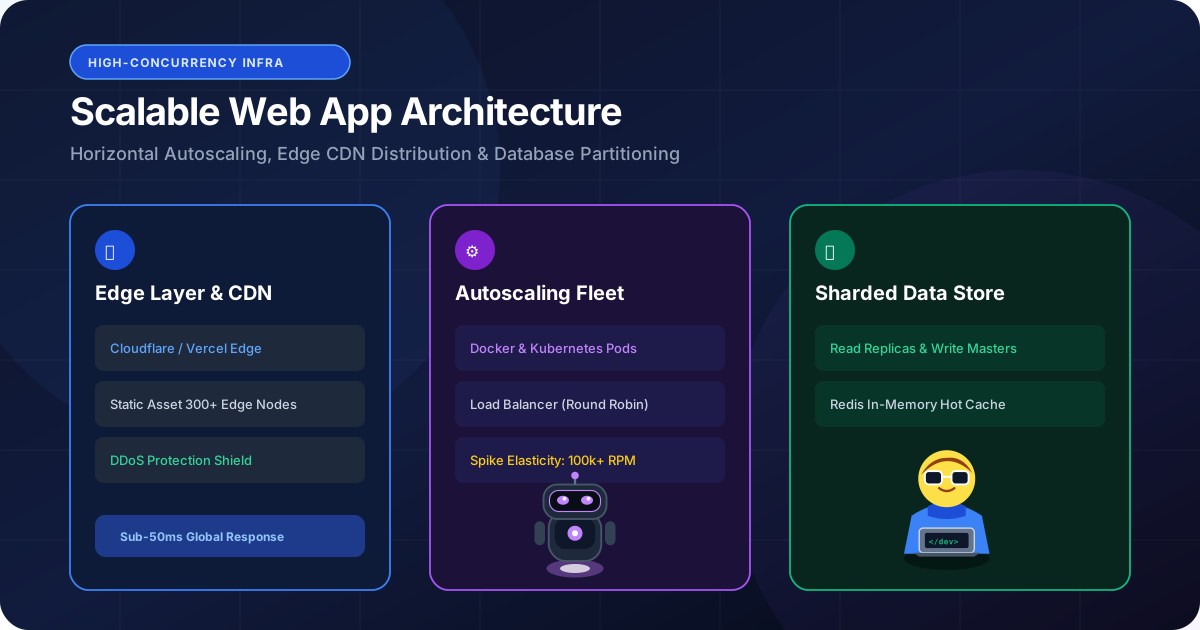
How to Build a Scalable Web Application for a Growing Business
Learn how to architect scalable web applications. Discover proven strategies for horizontal scaling, database read replicas, Redis caching, and zero-downtime growth.